PP Duct Quality: ISO 9001, SGS Reports & Inspection
Verify PP duct quality before you buy: check ISO 9001 certificates, read SGS reports, sample key parameters, and add pre-shipment inspection to your order.
Sizing an electroplating fume exhaust: OSHA tank-class airflow tables, cyanide-acid segregation, PP/PVC/CPVC/FRP/SS material matrix, and a spec checklist.
Design a laboratory fume hood exhaust duct from airflow first: face velocity, a PP/PVC/CPVC/FRP/stainless material matrix, and a checklist for your engineer.
Air duct sizing from CFM or m³/h to duct diameter: velocity method formulas, a CFM-to-diameter conversion table, method choice, and a worked example.
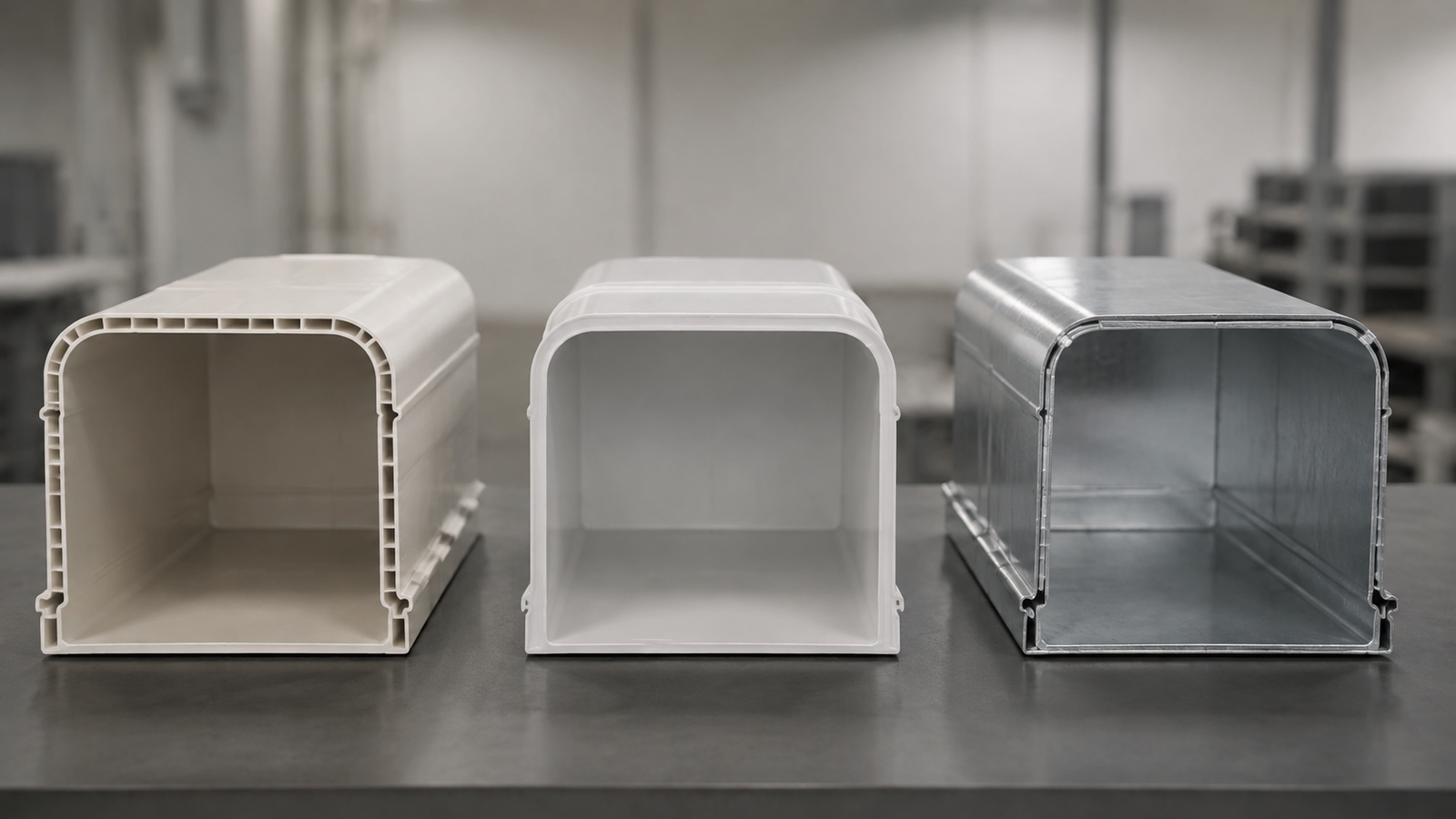
Compare nine ventilation duct materials for industrial and laboratory exhaust, then narrow the shortlist with a five-step selection order, a worked example, and a six-item supplier RFQ.
Advantages of polypropylene duct for corrosive fume and lab ventilation: five core advantages, conditions behind each, failure boundaries, lifecycle cost, and a supplier checklist.
PP duct vs PVC vs galvanized vs PE for industrial process air: a six-dimension comparison covering chemical resistance, temperature, strength, weight, cost, and service life, with a five-step selection order and a worked example.
What is a PP air duct? A definitional guide to polypropylene ducting: what it is made of and how it is joined, its key properties, how it compares with metal, FRP and PVC ducting, and the standard sizes, wall thickness and temperature rating.
A practical guide to ventilation duct sizing for industrial exhaust: the velocity method and equal friction method, round-to-rectangular equivalent diameters, industrial velocity boundaries, and selecting a stock PP duct size with the right wall thickness.
A practical guide to choosing duct material for corrosive and acid fumes: how to match media, temperature, and concentration to material resistance ranges, where polypropylene works and stops, and when to move to FRP or stainless steel.