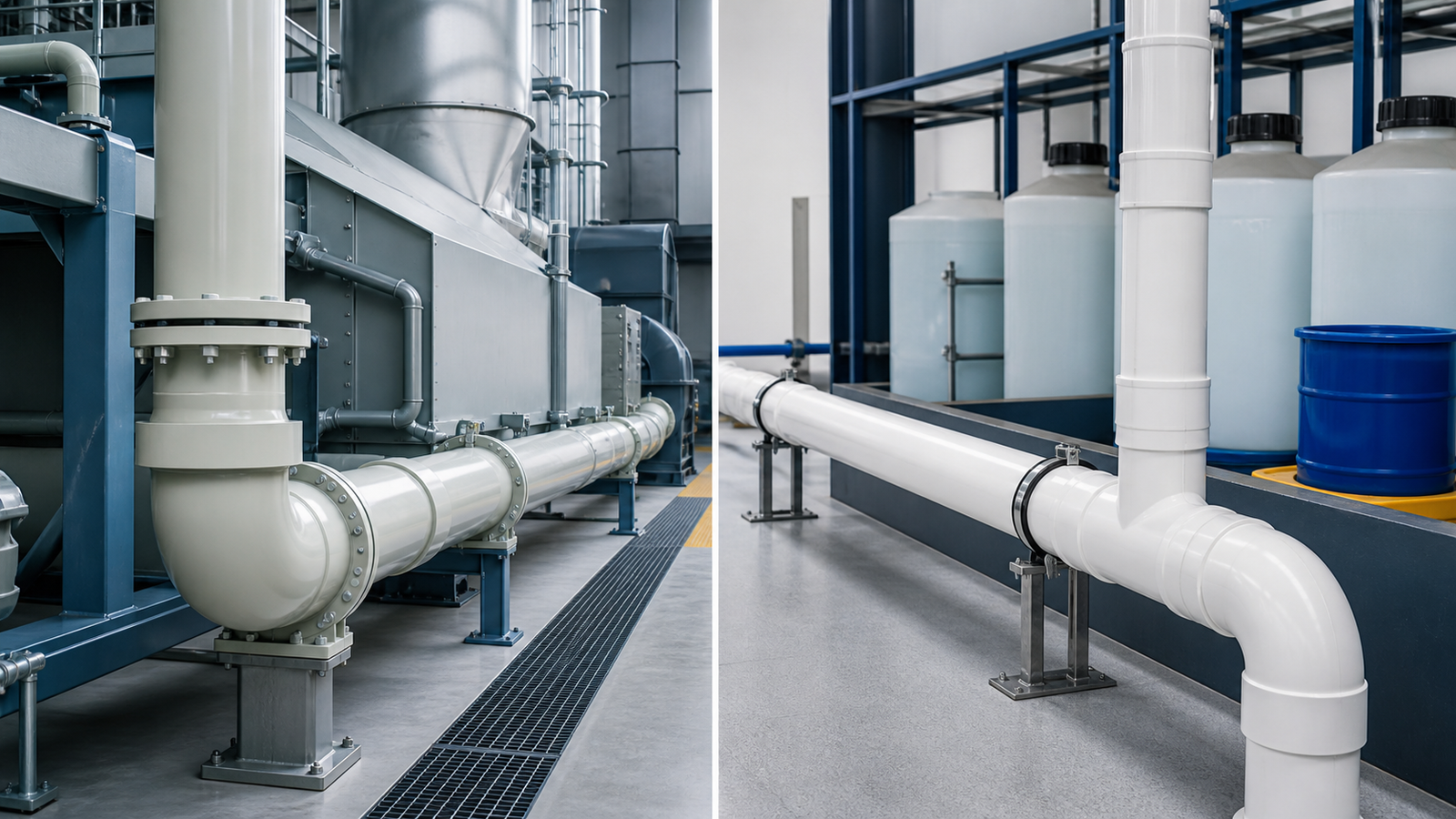
PP Pipe vs PVC Pipe: Full Comparison
PP vs PVC pipe: continuous 60 °C vs 80 °C, two-way chemical resistance, stiffness vs weight, solvent cement vs welding, honest life-cycle cost.

PP vs PVC pipe: continuous 60 °C vs 80 °C, two-way chemical resistance, stiffness vs weight, solvent cement vs welding, honest life-cycle cost.
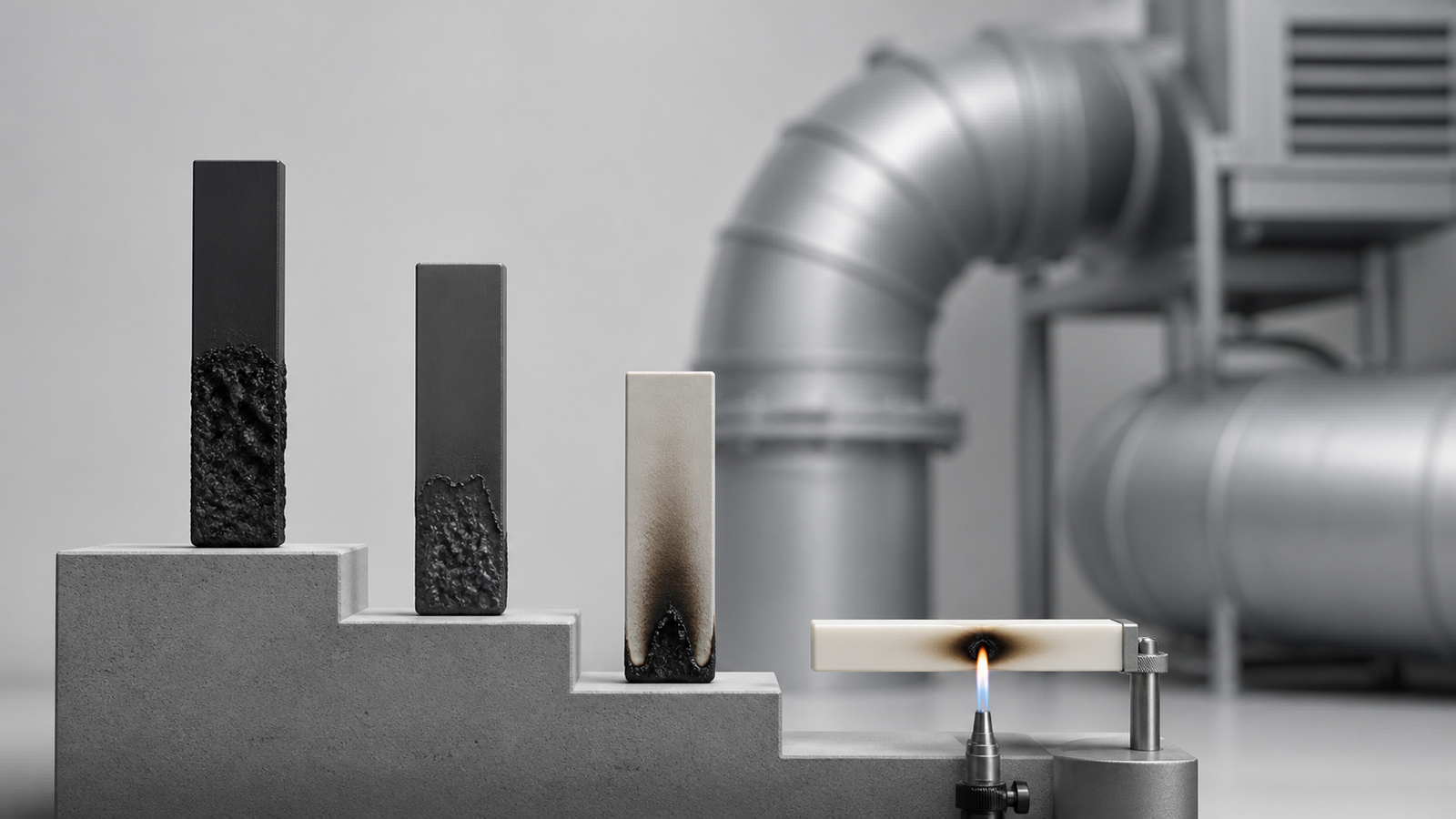
Plastic flame retardant grades V-0, V-1, V-2, HB: what they mean, the exact UL 94 test criteria, and what to verify before ordering duct.
Industrial PP duct insulation and sealing: use the dew-point check to decide, pick R-value and thickness, and specify a SMACNA seal class with leakage testing.
How to specify a custom PP duct: what sizes and tolerances you can set, when custom beats catalog, and what to include in an OEM duct inquiry.
Verify PP duct quality before you buy: check ISO 9001 certificates, read SGS reports, sample key parameters, and add pre-shipment inspection to your order.
Sizing an electroplating fume exhaust: OSHA tank-class airflow tables, cyanide-acid segregation, PP/PVC/CPVC/FRP/SS material matrix, and a spec checklist.
Design a laboratory fume hood exhaust duct from airflow first: face velocity, a PP/PVC/CPVC/FRP/stainless material matrix, and a checklist for your engineer.
Air duct sizing from CFM or m³/h to duct diameter: velocity method formulas, a CFM-to-diameter conversion table, method choice, and a worked example.
Compare nine ventilation duct materials for industrial and laboratory exhaust, then narrow the shortlist with a five-step selection order, a worked example, and a six-item supplier RFQ.
Advantages of polypropylene duct for corrosive fume and lab ventilation: five core advantages, conditions behind each, failure boundaries, lifecycle cost, and a supplier checklist.