
Plastic flame retardant grades are the letter-and-number labels — V-0, V-1, V-2, HB — that describe how a plastic material behaves in the small-scale burn tests defined by the UL 94 standard. They rank the self-extinguishing performance of the material itself: how quickly a test specimen stops burning after the flame is removed, and whether flaming drips ignite a cotton indicator below it. The common misconception is to read them as a fire-safety certificate for a finished system: a V-0-rated duct material is not automatically fire-rated ductwork. The sections below give the exact test criteria for each grade, explain why a rating is tied to thickness, and close with a checklist you can use to verify what a supplier actually delivers.
Key Takeaways
– Plastic flame retardant grades (UL 94: V-0, V-1, V-2, HB) describe how a plastic behaves in small-scale burn tests — they rank material self-extinguishing performance, not system fire resistance.
– V-0 is the strictest vertical rating: each specimen must stop burning within 10 seconds (50 seconds total for 10 flame applications) without flaming drips that ignite cotton.
– V-1 vs V-2: V-1 relaxes the limits to 30 and 250 seconds and still forbids cotton-igniting drips; V-2 is identical to V-1 except that flaming drips are allowed.
– HB is the minimum rating — horizontal slow burning (≤ 40 mm/min at 3–13 mm thickness), not self-extinguishing.
– Thickness matters: ratings are tied to thickness and formulation — report a rating together with the tested thickness, and ask for the supporting document before you order.
– Material vs system: a V-0 material grade does not make a duct fire-rated; system-level requirements are decided by the authority that governs your project.
Plastic Flame Retardant Grades: What They Are and Why They Matter
Plastic flame retardant grades are classifications from UL 94, the plastics flammability standard published by Underwriters Laboratories, and they describe how a plastic sample behaves in a controlled flame test. UL 94 defines 12 flame classifications in three groups: six for materials commonly used in enclosures, structural parts and insulators (5VA, 5VB, V-0, V-1, V-2, HB), three for low-density foams (HF-1, HF-2, HBF), and three for thin films (VTM-0, VTM-1, VTM-2). The four grades that appear on most material data sheets for products from cable guides to air ducts — V-0, V-1, V-2 and HB — are the focus of the sections below; the VTM and HF groups use different test methods and cannot be translated into V ratings.
| UL 94 group | Classifications | Typical test position |
|---|---|---|
| General materials | 5VA, 5VB, V-0, V-1, V-2, HB | Vertical bars (V and 5V) or horizontal bar (HB) |
| Low-density foams | HF-1, HF-2, HBF | Horizontal, foamed specimen |
| Thin films | VTM-0, VTM-1, VTM-2 | Vertical, thin material |
Within the general group, the 5V tests use a more severe flame — a 500 W, 125 mm flame versus the 20 mm flame of the V tests — so a 5VA or 5VB rating sits above V-0 in severity, and neither VTM nor HF ratings can be equated to V ratings.
The division is simple to remember. The three vertical grades are tested on a specimen held upright, and the material must self-extinguish within a defined time after the ignition flame is removed. The HB grade is tested horizontally and only limits the burning rate — it is “slow burning,” not self-extinguishing. A rating is always reported for a specific specimen thickness, which is why a flame-retardant brochure that lists “V-0” without a thickness is incomplete. For a ventilation context, flame-retardant PP duct shares its fabrication logic with standard PP air duct (both are formed from PP sheet and welded), while the flame-retardant grade behaves differently in a burn test; the distinction between the two material families is covered in the PP duct comparison guide.
By the end you will be able to interpret a grade such as “V-0” on a material data sheet, tell a material-level rating from a system-level fire rating, and verify whether a supplier’s flame-retardant claim is supported by documents. If you already know your project needs flame-retardant ductwork, the specification and verification steps are in the final sections — and you can check what a PP air duct system includes before you compare grades.
The Four Core Grades: V-0, V-1, V-2, and HB Explained
The four plastic flame retardant grades V-0, V-1, V-2 and HB answer two questions about a plastic specimen: does it stop burning after the test flame is removed, and does it drip flaming particles that ignite a cotton indicator placed below it? V-0, V-1 and V-2 are all self-extinguishing vertical ratings that differ in how fast the specimen must stop burning and whether flaming drips are permitted; HB is the horizontal slow-burning grade and is the lowest of the four.
What the Letters and Numbers Mean
The V stands for the vertical burn test, in which a specimen is held upright and the ignition flame is applied twice for 10 seconds each. The numbers 0, 1 and 2 mark increasing tolerance for how long burning continues after the flame is removed: V-0 is the strictest, V-1 is intermediate, and V-2 is the least strict of the vertical ratings. HB stands for horizontal burning, a separate test in which a flat specimen burns along its length and the rating only limits the rate of burn.
The Rating Order
| Grade | One-line meaning | Self-extinguishing after flame removal? |
|---|---|---|
| V-0 | Vertical specimen stops burning within 10 seconds; no flaming drips that ignite cotton | Yes — strictest of the four |
| V-1 | Vertical specimen stops burning within 30 seconds; no flaming drips that ignite cotton | Yes |
| V-2 | Vertical specimen stops burning within 30 seconds; flaming drips that ignite cotton are allowed | Yes |
| HB | Horizontal specimen burns slowly (≤ 40 mm/min at 3–13 mm thickness) | No — slow burning, lowest rating |
Reading the order from the table: HB is the minimum classification, then V-2, then V-1, then V-0, with the stricter 5VA and 5VB ratings above V-0 for materials used in larger enclosure applications (those tests use a more severe flame, about five times the severity of the V test). When you see a grade on a data sheet, check which test it came from first: a vertical rating proves self-extinguishing behavior, an HB rating only proves slow burning. That single check decides whether the material meets the behavior your application needs.
Vertical Burn Test: The Exact Criteria for V-0, V-1, and V-2
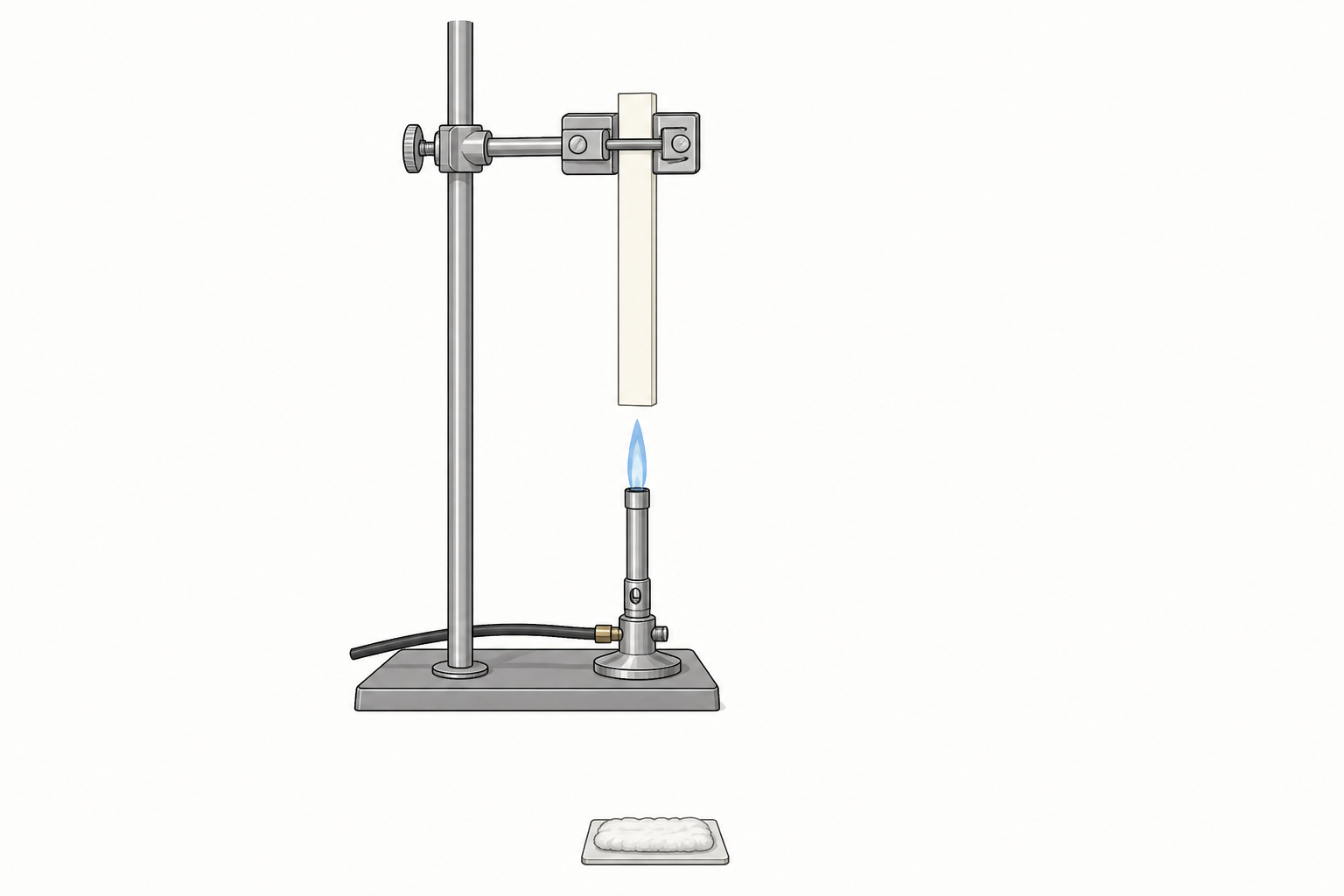
V-0, V-1 and V-2 are decided by five criteria applied to the same vertical test: the after-flame time after each flame application, the total after-flame time across ten applications, the combined after-flame and afterglow time after the second application, whether burning reaches the holding clamp, and whether dripping particles ignite a cotton indicator 300 mm below the specimen. The three grades differ on only three of those five lines; the other two are identical.
How the Vertical Test Is Run
The specimen is a rectangular bar 125 mm long and 13 mm wide, typically tested at 0.7 mm, 1.5 mm or 3.0 mm thickness (UL 94 reports ratings by thickness). Ten specimens are tested per thickness: five are conditioned for 48 hours at 23 °C and 50% relative humidity, and five for 7 days at 70 °C in a hot-air oven. Each specimen is clamped upright, a blue 20 mm flame is applied to the lower edge for 10 seconds and removed, and if burning stops within 30 seconds the flame is reapplied for another 10 seconds. The second application begins as soon as the first burning period ends. Flaming drips, if any, fall onto dry absorbent cotton placed 300 mm below.
The Five Criteria That Separate V-0, V-1, and V-2
| Criterion (per the UL 94 test) | V-0 | V-1 | V-2 |
|---|---|---|---|
| After-flame time after each flame application | ≤ 10 s | ≤ 30 s | ≤ 30 s |
| Total after-flame time, 10 applications | ≤ 50 s | ≤ 250 s | ≤ 250 s |
| After-flame + afterglow after the second application | ≤ 30 s | ≤ 60 s | ≤ 60 s |
| Burning up to the holding clamp (specimen fully consumed) | Not allowed | Not allowed | Not allowed |
| Flaming drips ignite cotton 300 mm below | Not allowed | Not allowed | Allowed |
Two differences carry most of the practical weight. V-0 versus V-1 is a time difference: V-0 demands the tightest after-flame and afterglow limits, which is why a designer who needs maximum self-extinguishing performance specifies V-0. V-1 versus V-2 is a drip difference: the burning times are identical, and only the drip rule changes.
A note on reading tables like this: figures such as 30 s or 60 s are sometimes quoted online as the time to stop burning, but in the UL 94 criteria they are the after-flame plus afterglow limits after the second application — the per-application after-flame limit for V-1 and V-2 is 30 s, and for V-0 it is 10 s. When you compare a data sheet against this table, check the criterion line, not just the headline letter. The criteria in this table follow UL 94 as published by UL Solutions; the same criteria, with the specimen and conditioning details, are summarised by RTP Company.
The HB Rating: Slow-Burning, Not Self-Extinguishing
HB is the lowest of the four grades and means exactly “slow burning” on a horizontal specimen: the material may keep burning after the flame is removed, and the rating only limits how fast the flame front travels. It is not a self-extinguishing classification. If your part or duct must stop burning on its own, an HB rating does not prove that behavior — you need one of the vertical grades.
The Horizontal Test Procedure
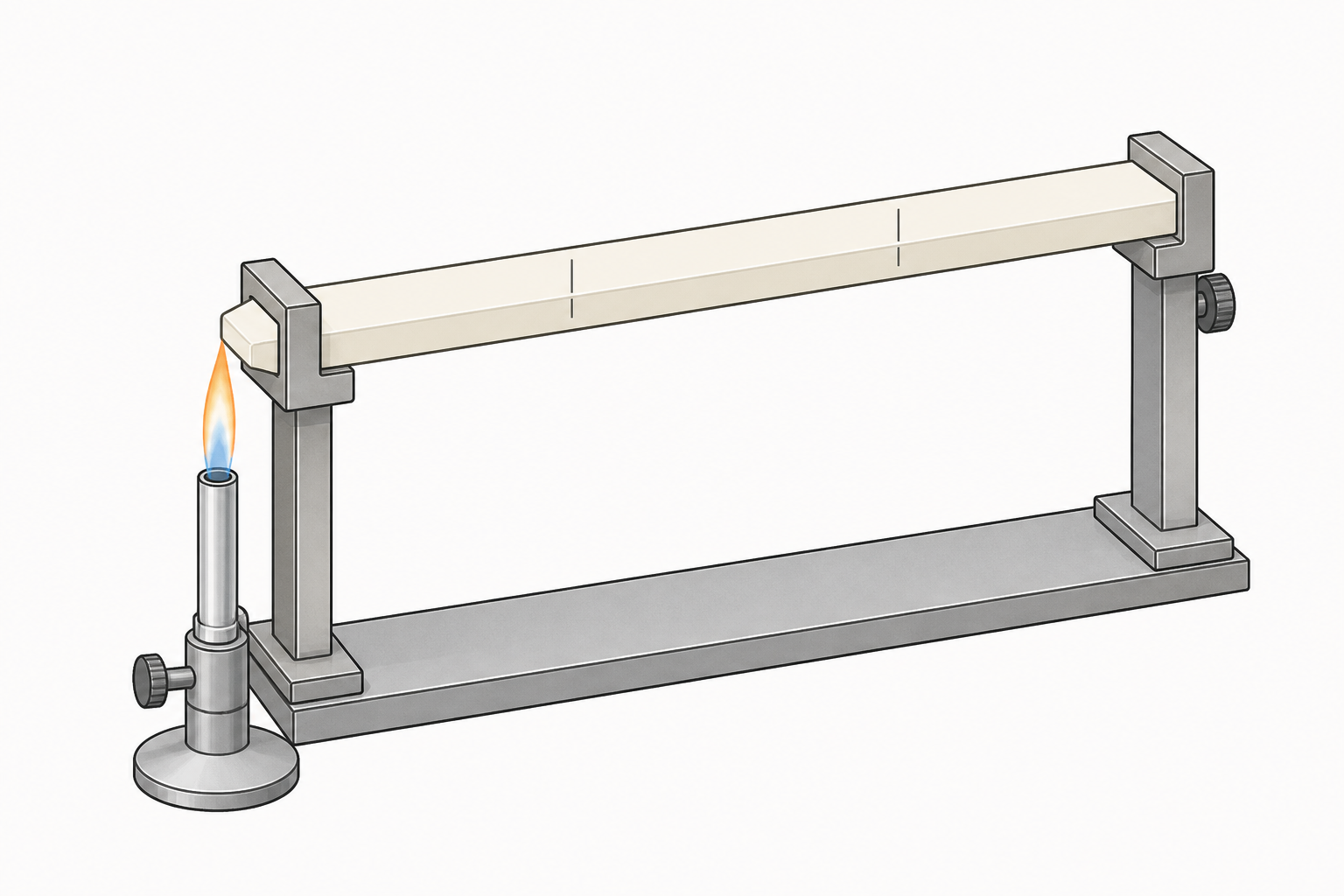
The specimen lies flat, and a 20 mm flame is applied to one end for 30 seconds; if the flame front reaches the first reference mark within those 30 seconds, the application is stopped early. The measured burning rate is then compared with a limit that depends on specimen thickness.
The Two Burn-Rate Limits
For a specimen 3–13 mm thick, the burning rate must be no more than 40 mm/min for an HB rating. Below 3 mm thickness the limit relaxes to 75 mm/min. If the flame extinguishes before reaching the first mark, the rate is recorded as zero and the material qualifies as HB. The thickness dependence is the same logic as the vertical grades: a rating without a stated thickness is incomplete.
| Specimen thickness | Maximum burning rate for HB |
|---|---|
| 3–13 mm | ≤ 40 mm/min |
| < 3 mm | ≤ 75 mm/min |
| Flame out before the first mark | 0 mm/min (qualifies as HB) |
Why “HB” Is Not “Fireproof”
Unmodified commodity thermoplastics such as polyethylene and polypropylene burn readily when exposed to a flame, which is exactly why flame-retardant grades are formulated for applications that need a vertical rating. An HB classification is a meaningful baseline — it shows the material does not propagate flame at an extreme rate — but it should never be read as fire resistance. For ventilation ductwork where the buyer wants flame-retardant behavior, specify the grade and verify it: a duct said to use flame-retardant polypropylene should carry an explicit vertical grade statement rather than an implied one.
Why a Plastic’s Rating Depends on Thickness and Formulation
A flame-retardant material grade is not an intrinsic property of the polymer family — it is a test result on a specific specimen at a specific thickness. The same base formulation can pass at 1.5 mm and fail at 0.74 mm, which is why UL 94 ratings are reported with the tested thickness and why a data sheet that states a grade without a thickness is incomplete.
The Thickness Trap
UL 94 test specimens are typically 0.7 mm, 1.5 mm or 3.0 mm thick, and the rating applies to those stated thicknesses. A compound that achieves V-0 at 1.5 mm may fail the same criteria at 0.74 mm. The practical consequence for ductwork: pipe walls are often several millimetres thick, and a large-diameter flame-retardant duct section is a different thickness regime from a thin injection-moulded part. Verify that the rating you are quoted covers the actual wall thickness of the duct you intend to buy, not merely that the same material family exists in thin test bars.
Formulation and the UL Yellow Card
Ratings are also formulation-specific. Changing a colorant, an additive package or the flame-retardant system can change the test outcome, so a rating from one grade of a resin does not automatically transfer to another grade of the “same” resin. The UL Yellow Card is the document that ties it together: it identifies the exact formulation, the tested thicknesses and the resulting ratings. When a material or product claim rests on a rating, the Yellow Card (or an equivalent test report) is the evidence to ask for.
Polypropylene: Naturally Flammable, Modified to Pass
Polyethylene and polypropylene are easily flammable in their unmodified form; that is the baseline, not a defect of the material. Flame-retardant PP formulations are compounded specifically to change that behavior so a vertical grade (for example V-0) can be claimed at the tested thickness. The engineering point for a buyer is straightforward: if an application needs self-extinguishing duct material, the requirement belongs in the specification — state the grade and the wall thickness up front — and the verification belongs in the documents you receive with the order. The operating advantages of PP ductwork, and where the material’s natural limits matter, are covered in the PP duct advantages guide.
Material Grade vs. Fire-Rated Ductwork: What UL 94 Does Not Mean
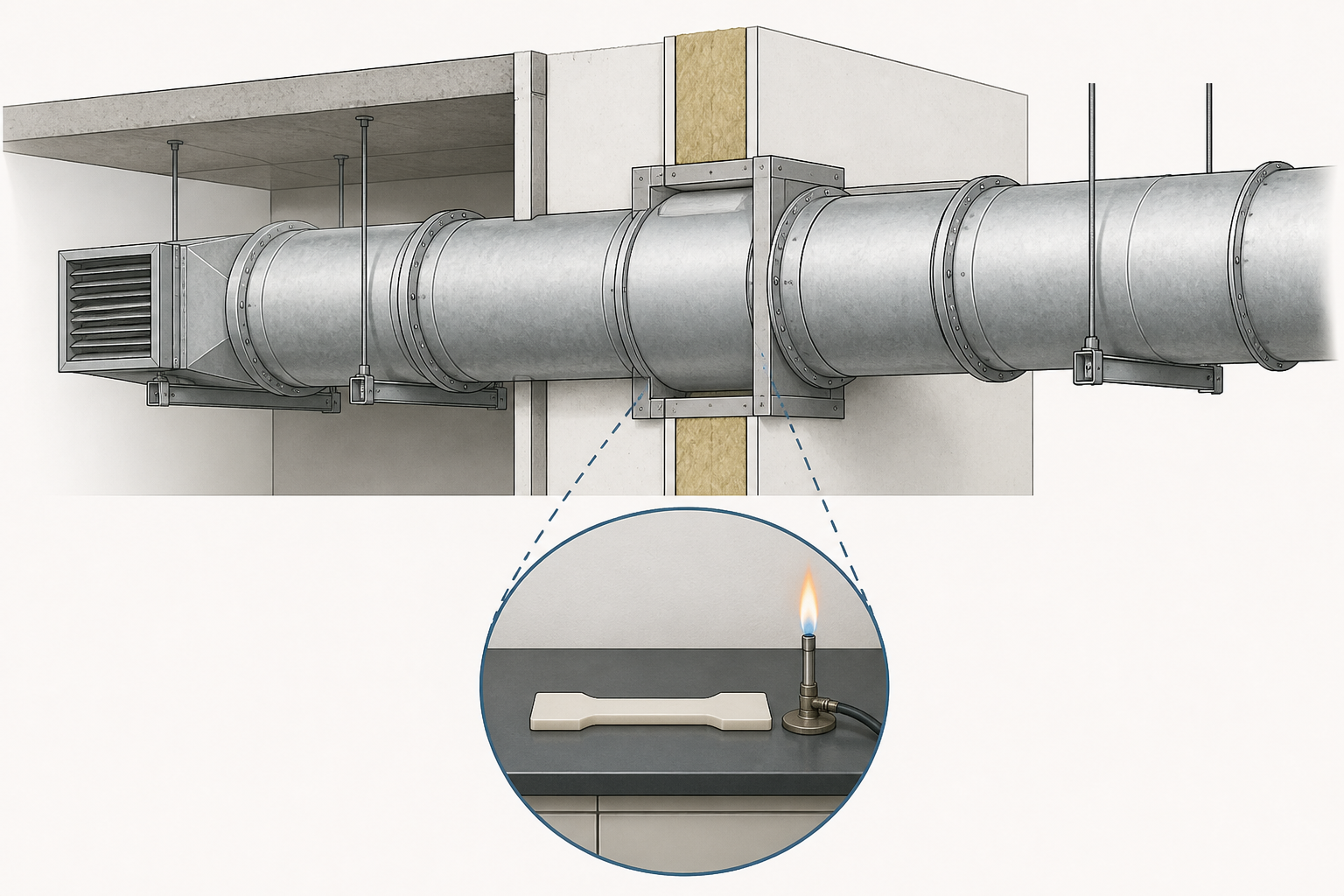
UL 94 grades describe what a small plastic specimen does in a laboratory burn test; they do not describe what a full duct system does in a building fire. A V-0 material grade is a material-level statement, and it is not a fire-resistance rating for a duct assembly. Where local codes mandate fire-rated or smoke-control ductwork, the requirement is system-level and is decided by the specification authority for your project — not by a material grade.
What a Material Grade Can and Cannot Tell You
A grade tells you that the tested material stopped burning within the stated limits at the stated thickness — a repeatable, comparable fact from a standard test. It cannot tell you how a welded duct run behaves with joints, flanges, hangers and penetrations in a real fire, because nobody tested that assembly in the small-scale UL 94 specimen test. That separation is the single most important reading skill in this topic: material evidence on one side, system evidence on the other.
Fire-Rated and Smoke-Control Ductwork
Fire-rated and smoke-control ductwork are assemblies tested and certified as systems, usually against building-code requirements that cover flame spread, smoke production and containment. Whether a project must use such certified ductwork is determined by the applicable code and the specifying authority; a material grade alone does not answer that question. If the authority requires a certified system, ask for the system-level certification document and keep material grades in their own category.
The Distinction in Practice for Flame-Retardant PP Duct
Flame-retardant polypropylene duct is engineered so the duct material itself reduces flame spread — XICHENG’s flame retardant PP ventilation pipe product page states that a V-0 flame retardant grade is available, and states equally clearly that the product is not a substitute for certified fire-rated or smoke-control ductwork. That positioning is exactly the material/system boundary described above and it is the right question to carry into procurement: what is the material grade, and separately, does the project require a certified system? The PP duct guide covers duct types and materials from this same perspective.
How to Verify a Flame Retardant Grade Before You Order
Verifying a plastic flame retardant grade is five checks, not one: confirm the grade wording with its thickness, confirm that thickness covers your duct wall, ask for the supporting test document, and confirm what the grade does — and does not — cover. The checks take minutes and they prevent the most common procurement error, which is treating a material label as a system certificate.
The Five-Point Verification Checklist
- Grade with thickness. Ask the supplier to state the flame retardant grade together with the tested thickness (for example, V-0 at 1.5 mm). A grade without a thickness is incomplete.
- Wall-thickness coverage. Confirm the tested thickness covers the actual wall thickness of the duct you are buying — a large-diameter section, such as the 500 mm class used in industrial runs, is a different thickness regime than a thin test bar.
- Supporting document. Ask for the test report or UL Yellow Card that documents the rating; the Yellow Card ties the exact formulation and tested thicknesses to the result.
- Scope of the grade. Confirm in writing whether the claim is material-level only, and ask separately whether the project requires a certified fire-rated or smoke-control duct system.
- Grade confirmed per project. Confirm that the supplied grade matches the duty you specified — diameter, wall thickness, temperature and gas conditions — rather than a generic “flame retardant” label.
The five checks collapse into a two-way exchange: you give the supplier the parameters, the supplier gives you back the evidence. The table below shows what each check is meant to catch.
| You ask for | What the answer should include | It catches |
|---|---|---|
| Grade statement | Grade + tested thickness (e.g. V-0 at 1.5 mm) | Vague “flame retardant” wording |
| Wall-thickness coverage | Proof the tested thickness matches your duct wall (e.g. a 500 mm class section) | Ratings from thin test bars only |
| Supporting document | Test report or UL Yellow Card for the exact formulation | Unverifiable verbal claims |
| Scope statement | Written material-level statement + separate system-certification answer | Material label read as system certificate |
| Project confirmation | Grade confirmed against your diameter, wall thickness, temperature and gas duty | Generic grade not fit for duty |
What to Send a Supplier
A quotation request should carry the parameters the supplier needs to confirm both the grade and the construction: required diameter(s), wall thickness, section length and quantity, the required flame retardant grade, the application, destination port, and your duct schedule or drawings. For flame-retardant PP ductwork, the XICHENG range covers large-diameter sections with socket or flange connections, round-flange reinforcement, a working temperature range of −15 °C to 80 °C and chemical resistance across pH 1–14 as stated on the product page. Send those parameters to the XICHENG engineering team for confirmation of the grade against your actual duty — the same verification discipline described above applies to any flame-retardant duct supplier you evaluate, and the wider PP air duct range is documented on the same product pages.
FAQ: Plastic Flame Retardant Grades — V-0, V-1, V-2, HB
What do V-0, V-1, V-2 and HB stand for?
V-0, V-1 and V-2 are self-extinguishing ratings from the UL 94 vertical burn test; the number marks how strictly the specimen must stop burning (V-0 is the strictest). HB is the horizontal burning rating and only limits the burning rate — it is slow burning, not self-extinguishing. The vertical test applies a 20 mm flame to a 125 mm by 13 mm specimen twice for 10 seconds each, with cotton placed 300 mm below to catch drips.
Which is better, V-0 or V-1?
For self-extinguishing performance, V-0 is the stricter grade: each specimen must stop burning within 10 seconds and the total after-flame time across 10 applications must not exceed 50 seconds, versus 30 seconds and 250 seconds for V-1. Where a project needs the tightest material behavior, specify V-0 and confirm the tested thickness, keeping in mind that a thinner wall may behave differently than a thicker one.
Is a V-0 plastic duct fire rated?
No. A V-0 material grade describes the behavior of the plastic specimen in a laboratory test; it is not a system-level fire-resistance rating for ductwork. Certified fire-rated or smoke-control ductwork is a separate, system-level classification determined by the applicable code and its specifying authority. A flame-retardant duct supplier should state both sides of that boundary: the material grade it can supply, and that the duct is not a substitute for a certified fire-rated system.
Does a rating change with thickness?
Yes. UL 94 ratings are reported for specific specimen thicknesses (typically 0.7 mm, 1.5 mm or 3.0 mm), and the same formulation can pass at 1.5 mm and fail at 0.74 mm. Always ask for the grade together with the tested thickness and check that it covers the actual wall thickness of the duct you intend to buy.
What grade should I specify for industrial ductwork?
Specify the grade that matches the duty and the verification you can obtain: name the grade, the wall thickness, and the supporting document (test report or UL Yellow Card). If the local authority requires a fire-rated or smoke-control duct system, specify the certified system separately. For flame-retardant PP ductwork, send your diameter, wall thickness, length, quantity and duty details to the supplier so the grade can be confirmed against the actual project — XICHENG’s engineering team can confirm the grade against your duty via the contact page.
Is VTM-0 the same as V-0?
No. VTM-0, VTM-1 and VTM-2 are UL 94 classifications for thin films that cannot support themselves in a horizontal position, and they are tested with a different procedure — including a shorter flame application of 3 seconds instead of 10 seconds. A VTM rating cannot be equated to (or converted into) a V-0, V-1 or V-2 rating, and vice versa. Keep the two families separate in your specifications, and select the rating that matches the actual part geometry and its stated test method.