Description
Product Overview
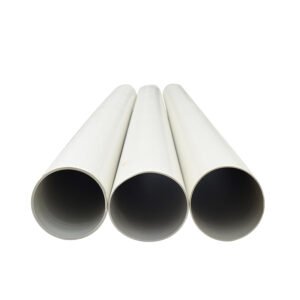
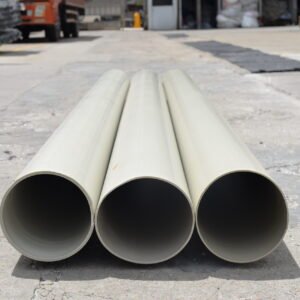
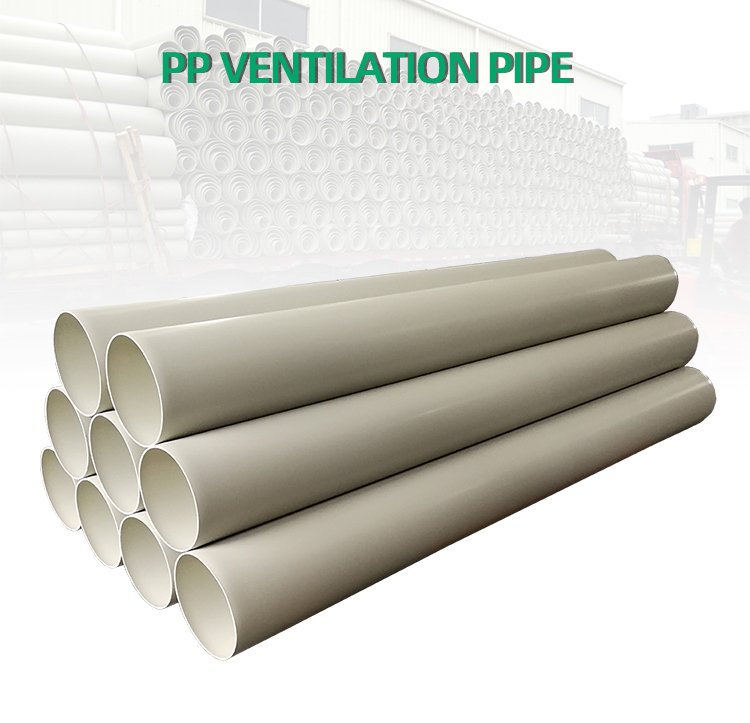
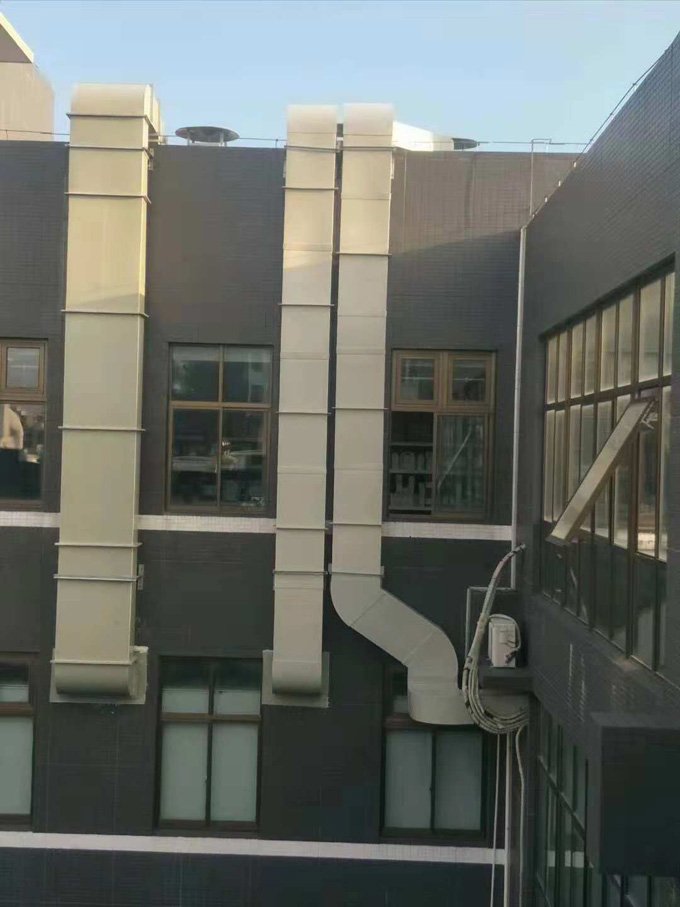
PP exhaust ducts, also known as plastic air ducts, are polypropylene ducts for exhausting corrosive gases from chemical plants, electroplating lines, laboratories and other facilities that produce acid and alkali fumes. They are made in standard and flame retardant PP grades, and can be produced as round, rectangular or oblate sections to suit the duct run.
PP is chosen for this duty because of its strong corrosion resistance and toughness. In toughness, PP air ducts are more prominent than PVC air ducts, so in terms of service life PVC ductwork cannot be compared. PP exhaust ducts are light in weight and resistant to acid and alkali attack, which keeps exhaust systems from corroding in aggressive industrial atmospheres.
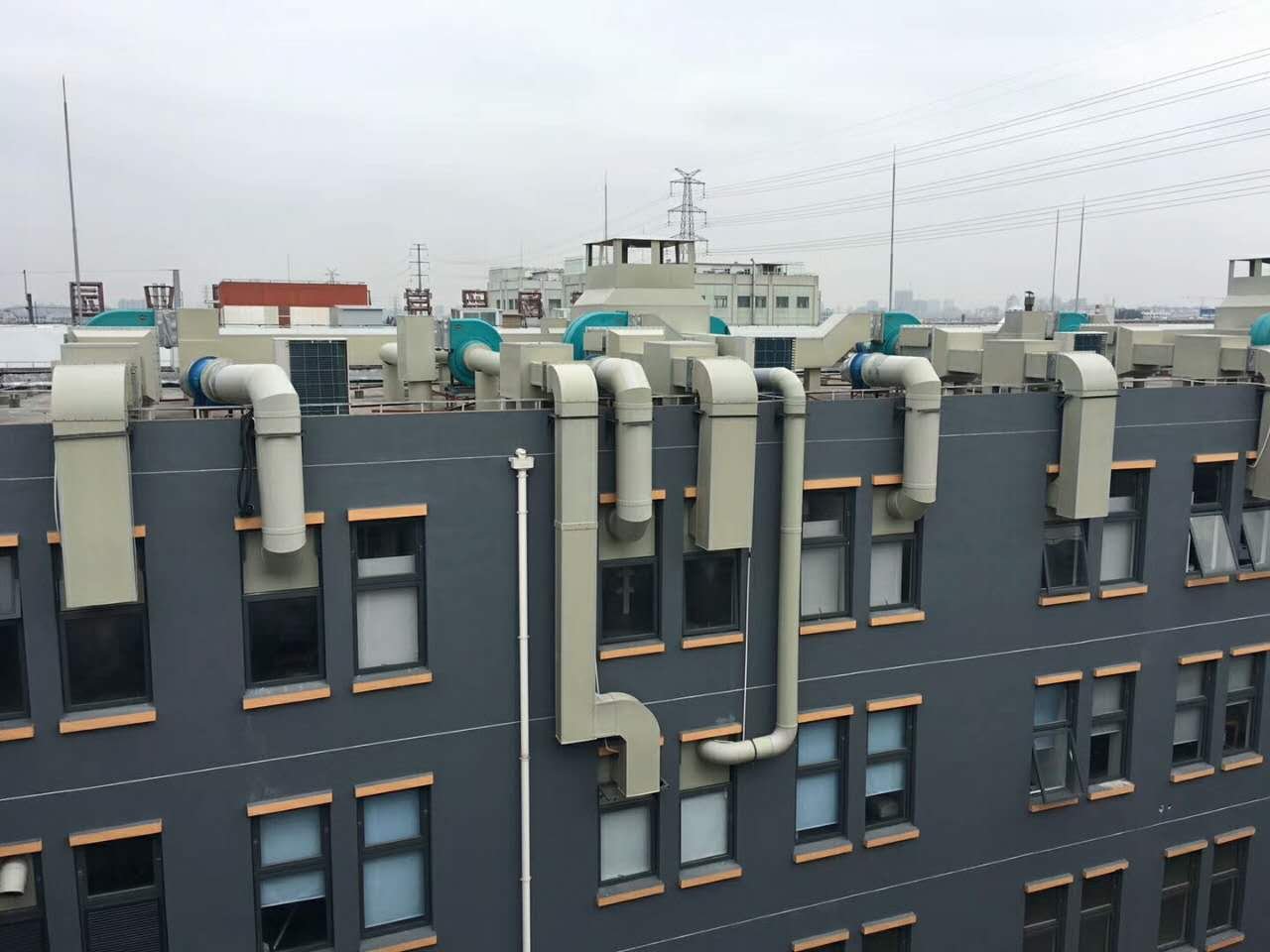
An exhaust duct is one part of a fume extraction system: it connects to fans, fittings and airflow dampers rather than replacing them, and the XICHENG range includes matching elbows, tees, reducers, flanges and dampers so a complete PP exhaust line can be specified from one supplier.
Product Selection Summary
Good Fit
- Chemical plants, electroplating lines and laboratories producing acid or alkali corrosive gases
- Exhaust systems needing round, rectangular or oblate duct sections
- Duct runs from small injection-molded sections up to large sheet-welded diameters
- Projects where resistance to corrosive fumes and long service life matter more than first cost
Conditions To Confirm
- Gas composition, concentration, temperature and moisture at the actual operating point
- Duct shape (round, rectangular or oblate) and dimensions per run
- Diameter and length; material grade (standard or flame retardant)
- Connection method (flange, socket, or hot-air welding) for each joint
- Available static pressure and airflow schedule
Not a Replacement For
- Fans, gas treatment or scrubbing equipment, airflow balancing devices or room controls
Technical Specifications
Confirmed Product Parameters
| Parameter | Value |
|---|---|
| Product Type | PP Exhaust Duct (round / rectangular / oblate) |
| Material | PP (polypropylene), standard or flame retardant grade |
| Shape | Round / Rectangular / Oblate |
| Diameter Range | Injection molded up to 600 mm; sheet-welded above 500 mm (flange reinforced) |
| Length | Customizable |
| Connection Method | Flange / Socket / Hot-air welding |
| Working Temperature | -15℃ to 80℃ |
| Chemical Resistance | pH 1-14 (acid and alkali) |
| Certification | ISO9001, ISO14001, RoHS |
Manufacturing & Quality Control
Two Production Methods
PP exhaust ducts are made by one of two methods, chosen by diameter:
- Injection molding: polypropylene raw material is extruded and molded by injection molding machine. The process is fully automated, giving uniform specifications and small dimensional error, and lengths can be customized. Injection molding is currently suitable for duct diameters below 600 mm.
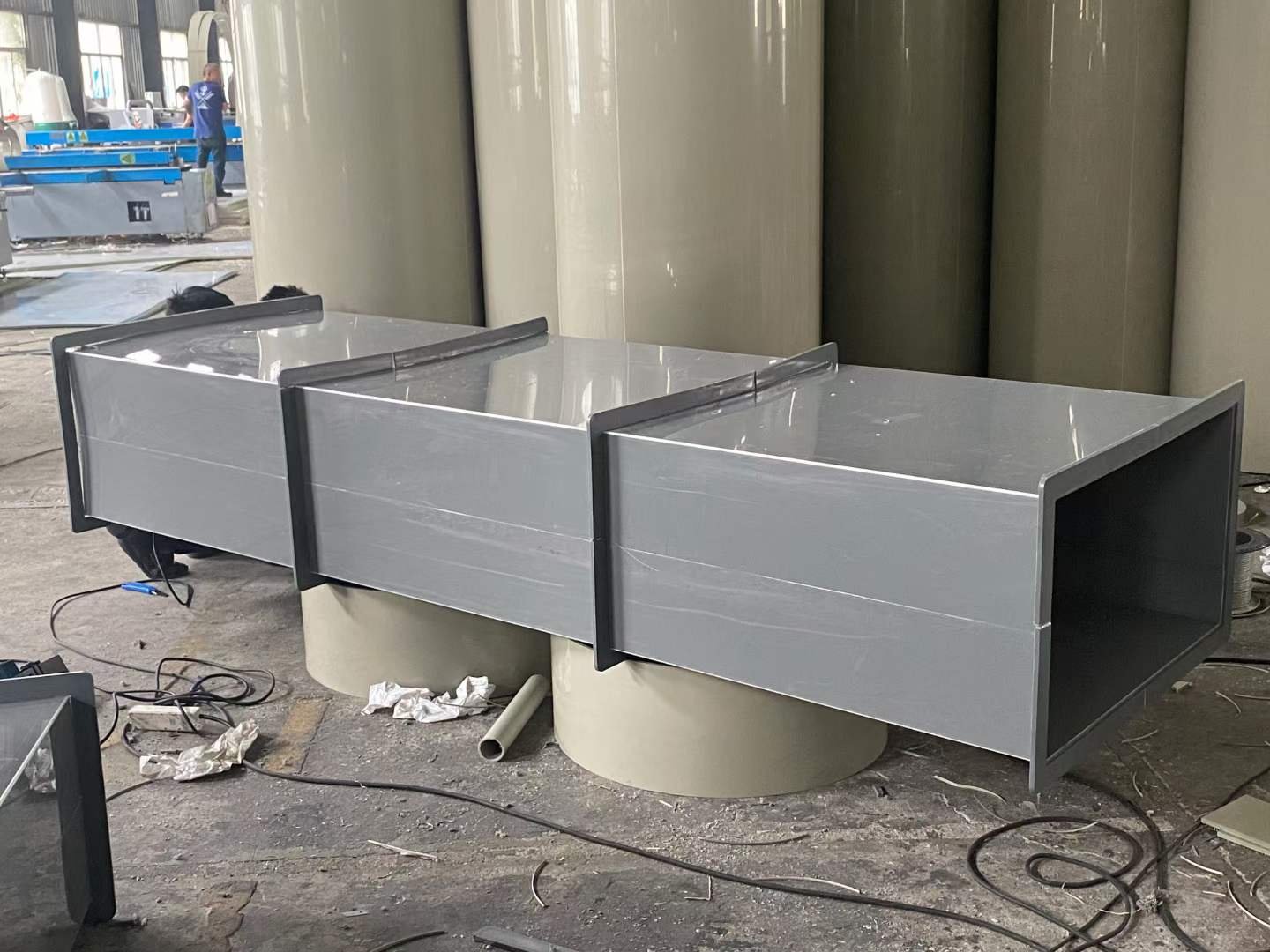
- PP sheet bending and welding: for large-diameter plastic air ducts, a specific PP sheet is bent and welded for production. Plastic air ducts with a diameter greater than 500 mm are prone to deformation, so flanges are used to reinforce the PP duct body.
Quality Control
Production follows documented quality requirements:
- The specifications, types, properties and thickness of PP duct materials conform to the design drawings and the national industry product standards.
- Specifications and dimensions meet the design requirements; appearance must meet straight folding angles, uniform arcs, parallel end surfaces and no warped feet.
- The inner surface of the duct is smooth. Horizontal joints, reinforcing ribs inside the duct and convex-rib reinforcement are not used; longitudinal seams at the bottom are minimized – a rectangular duct with a bottom edge under 800 mm has no longitudinal seam on the bottom edge. Nuts, bolts, washers and rivets are matched to the pipe performance, using materials that do not cause electrochemical corrosion (or are galvanized).
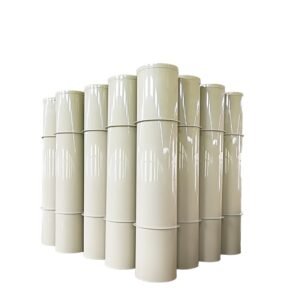
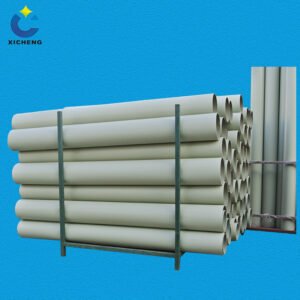
- After fabrication, the duct is wipe-tested: the inner surface is checked with white silk cloth for oil stains and floating dust, then the openings are sealed with plastic film. Stacking yards are kept flat, with stacking layers determined by duct wall thickness and diameter to avoid deformation.
- Gaskets for duct connection flanges are closed-cell sponge rubber with a thickness of not less than 5 mm.
Applications
PP exhaust ducts are favored by facilities that generate acid and alkali corrosive gases:
- Chemical plants handling corrosive process fumes
- Electroplating lines with acid and alkali bath vapors
- Laboratories and fume hood exhaust systems
- Industrial exhaust systems for aggressive gas streams
- Corrosive fume ventilation where ductwork must resist attack over a long service life
Because PP resists corrosion and offers higher toughness than PVC, exhaust systems made from PP air ducts are built to last in these environments.
Selection Notes & Quotation Information
To size a PP exhaust duct system, provide the gas composition, concentration and temperature, the duct layout, required shape (round, rectangular or oblate), diameter and length, and the available static pressure. Confirm whether standard or flame retardant PP is required and the connection method for each joint.
For a quotation please send: duct shape and required diameter(s), quantity, section length and wall thickness, material grade (standard or flame retardant), application, destination port, and preferred connection method. MOQ and lead time are confirmed per project.
Request a quote via WhatsApp or email using the contact block below.
Installation & System Integration
PP exhaust ducts are connected with socket joints, flanges or hot-air welding.
- Socket connection: a PP sleeve is welded at the end of each duct section so the next section inserts for a stable joint – fast field installation.
- Flange connection: PP flanges are welded at both ends of each duct section and locked with screws – suited to high-strength, high-sealing working conditions and allows maintenance disassembly. Connection flange gaskets are closed-cell sponge rubber, not less than 5 mm thick.
- Hot-air welding: creates a continuous sealed line where a monolithic run is preferred.
Large-diameter PP ducts (above 500 mm) are prone to deformation and are reinforced with external flanges during production. Complete exhaust systems combine PP ducts with matching accessories: PP 90° elbows, tees, reducers and flanges. See the full range of PP duct systems.
Related Products
- Polypropylene Round Ducts
- PP Air Duct
- Flame Retardant PP Duct
- PP 90° Duct Elbow
- PP Duct Flange
- Full PP Duct Range
- PP Air Duct Guide – a complete guide to PP duct types, sizes and materials.
FAQ
What is a PP exhaust duct?
A PP exhaust duct, also called a plastic air duct, is a polypropylene duct for exhausting corrosive gases from chemical plants, electroplating lines, laboratories and similar facilities. It is made in standard or flame retardant PP, in round, rectangular or oblate sections.
What shapes are available?
Round, rectangular and oblate sections are available. Select the shape that matches your duct layout – the product options include round and rectangular.
What is the maximum duct size?
Injection-molded ducts are suitable for diameters below 600 mm. Larger diameters are produced by PP sheet bending and welding, and duct bodies above 500 mm are reinforced with flanges to prevent deformation.
Can the duct be customized?
Yes. Length is customizable on injection-molded ducts, and shape, dimensions, wall thickness and material grade are confirmed per project based on your duct schedule and drawings.
Is flame retardant PP available?
Yes. Flame retardant PP is available where fire-rated ductwork is required; specify the required flame retardant grade when inquiring.
How does PP compare with PVC for exhaust ducts?
PP has higher toughness than PVC, which is why PP exhaust duct systems offer a longer service life in corrosive fume duty. PP resists acid and alkali attack while staying light and easy to install.
Contact the XICHENG EP Team Today.
Send your PP exhaust duct requirements – duct shape, diameter(s), quantity, length and wall thickness, material grade, application, destination and preferred connection method – and our engineering team will confirm specifications and return a quotation.
📌 Manufacturing Head Office: No.34 Zhenxing Road (Shengtaian Heavy Industrial Park B), Loucun, Guangming New Dist, Shenzhen, Guangdong, China
☎️ Direct Hotline / WhatsApp: +86 189 2745 6906
📬 Engineering Mailbox: xicheng023@outlook.com